
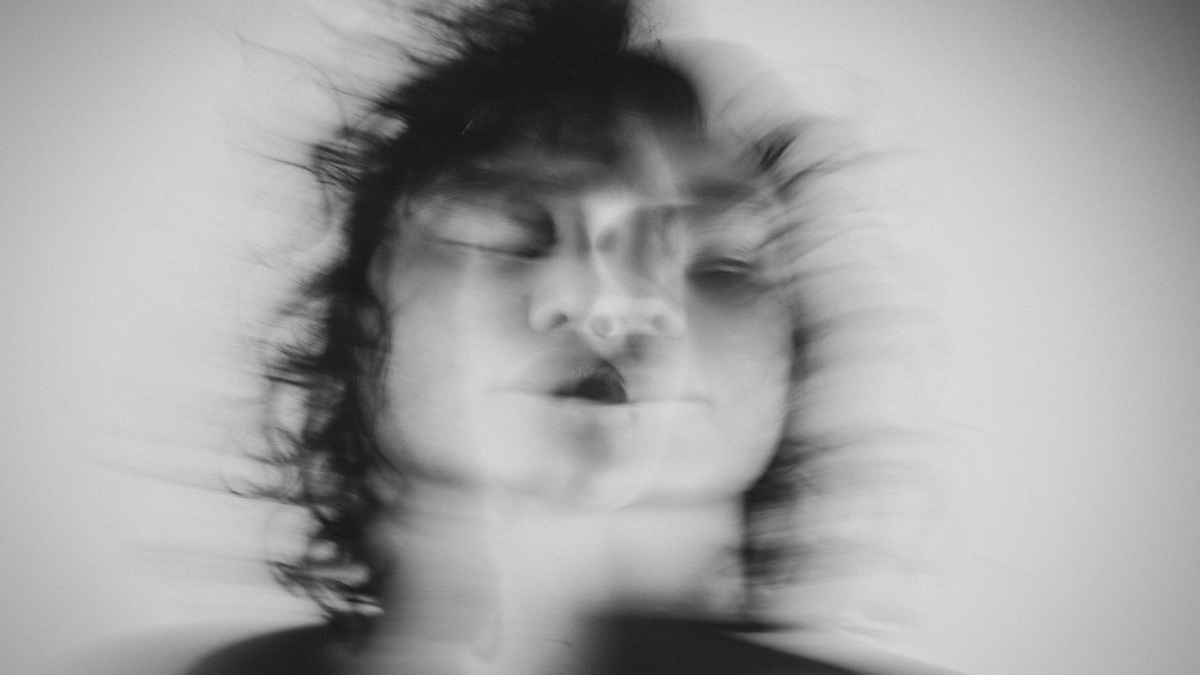
A Woman’s Right to Sing: The Creative Liberation of Kimia Farokhzad
You know that moment at a concert when a comfortable hush falls over the room, and your to-do list—and the news, and whatever other trivial chatter—finally just hums in unison like a barely noticeable background chorus? Or the surprise of tears dripping from your face into your seemingly suddenly opened palms? There’s a chance you were so enwrapped in the performance that you didn’t even notice until the drive home.
This shared presence—this chance to recognize the self in the other—is, I’d venture to assume, one of the reasons why, in Iran, women are not permitted to sing in public alone.
“Being wild is really important for me… you have no border... you can risk whatever you want.”
“Freedom” is how experimental artist Kimia Farokhzad characterizes her work, which incorporates voice, theatre, Persian poetry, and movement into her highly emotional and cinematic performances. Born in Tehran and currently based in Toronto, Kimia’s need to create moved her across the world to take her place telling stories on stage, and Toronto audiences are lucky she did.
Kimia frequents the local improvisational music scene and continues to push the boundaries of performance, performing earlier this fall with Night Shift at Fall for Dance North. She recently released a single “Ast” on June 19, produced in collaboration with Ali Roohbakhsh and Aryan Khosravi. The first of its kind, the song represents her emerging presence as an experimental recording artist.
“This performance is a fully improvised piece presented at Exit Points #66, an experimental series curated by Michael Palumbo. It was the first time I met the other performers and their instruments, and together we built the piece in real time on stage as a group of five artists. The work combines live performance, experimental sound, and improvisation. The lyrics and emotional direction were inspired by Another Birth by Forough Farrokhzad, one of the most influential voices in contemporary Persian poetry, known for her raw and pioneering perspective as a woman. This performance reflects my approach to creation—working intuitively, responding to sound, space, and collaborators, and allowing storytelling to emerge through voice, body, and presence in the moment.”
Meaning is created and negotiated through performance, within the performance itself, but also between the performer and audience. When we talk about taking creative risk in the West, it is often elevated by a basic assumption of opportunity, relative safety, and entitlement. Meanwhile in Iran, women and venues can be persecuted for hosting a show. While the Women, Life, Freedom movement shifted attitudes enough that certain Tehran venues allowed women to perform in secret, musicians continue to risk harm simply for practicing their craft.
“It is so dark, and so funny at the same time,” Kimia says. “When you’re a musician, there are so many limitations for you in Iran —even if you are a man, you cannot be free in your art.”
Yet performance is an essential aspect of creative development. “Having a show is something that helps you improve [and] level up your work.” After four or five years of singing privately, Kimia recalls her first opportunity to have a show with a mixture of graveness and glee. “It was beautiful,” she says. Until someone secretly filmed her, the police came, and the venue was banned. “That was the very first time I thought about immigration.”
“This performance is a reinterpretation of the classic Persian song “Mara Beboos” by Hasan Golnaraghi, presented with a new arrangement alongside a live band. The piece was created in response to the violence that took place during protests in Iran, particularly around January 8-9. It is dedicated to those who lost their lives while standing for freedom. Through this performance, I revisit a well-known song of farewell and transform it into a space for collective mourning and remembrance. The arrangement, combined with the energy of live performance, reflects grief, resistance, and the emotional weight of witnessing these events from afar.”
There are plenty of people in Toronto making music, performing, and attending performances casually. What is also common but much less visible is a whole population of artists whose need to express urged them to find home in our black boxes and dive bars.
“Alternative rock music, metal music, and some classical vocals are all shaping my process together. When I came to Toronto, I got interested in free jazz music as well as improvising in music. I was not improvising so much when I was in Iran as we didn’t have the space to release ourselves. In Toronto, I had the chance to see that I love this vibe. Improvisation is one of the biggest parts of my music and character.”
When I first began conceptualizing this piece, I was thinking along the lines of cultural resistance. After speaking with Kimia and witnessing the joy with which she relates to her work, I understand better that it’s her insistence that makes her performance so compelling.
“Anytime I didn’t find anything in my life that makes me happy and alive, I found art, and then it saved me. I had so many dark experiences in my life, and in all of them I can find this in common.”
Autonomy is something we often take for granted. The setting of a performance—the venue, the atmosphere, the ritual of attending—acts as a container within which a group of people can drop their defenses, expectations, and limitations, and experience something emotional, thought-provoking, and new.
“Sometimes [art] is the only way you can release this much emotion.”
Drawing on her roots, Kimia combines theatrical aspects like costumes and props, along with Persian poetry, movement, and vocal improvisation to fully embody the emotions of the story she is telling. In this process, the feeling transforms before the audience's eyes. While grief is central to her work, so is playfulness. “Being like a child is my philosophy in life as well,” she tells me. “Being childish or using childish melodies is one of the aspects of my work…because kids are always free.”
Live, experimental music facilitates a kind of collective risk-taking. It asks the audience to engage with discomfort and suspend judgement.
“When it comes to art, people can see and feel those emotions, and it becomes something interesting,” she says with a bit of wonder, “Not just suffering, dark… it becomes something beautiful in my mind.”
The audience is as much a part of the performance as the artist on stage, and together audience and artist practice relating to one another. In plain terms, we empathize through performance.
“When I see them cry, I feel like, okay, it means that they are enjoying the show, and they feel me, so they cry.” Performance is a way of witnessing, mirroring, and discovering, whether you are on stage or in the audience, the performance opens a channel of communication. “We have something in common.”
When I ask if there is a message or anything she hopes audiences experience, Kimia answers conclusively, “I want them to feel free and feel the freedom in my performance and in my music.”
“Freedom is the only thing.”