
Making Room For Something Else
I had an uncanny feeling stepping into Dina’s Tavern for Fiver’s show this past July. The narrow venue, with the stage on my right and the bar on my left, brought me right back to the Silver Dollar Room, the music venue Dina’s was originally designed as a carbon copy of. I never quite knew where to stand in the Silver Dollar, and years later, that awkward sense memory came surging back. When the original property that housed the storied venue was sold to a developer some years ago, there was a protracted battle in the city to save it. A compromise was struck to create a near identical venue within the condo development so that another music venue would not be displaced—but of course, nothing ever goes as planned in Toronto. After some setbacks, the iconic Silver Dollar sign now sits on the building, covered, and new owners of the establishment have welcomed music back with Dina’s.
Catching up with Simone Schmidt of Fiver via a video call, they likened the experience to the film Back To the Future. “I kept expecting a robot waiter or a floating cocktail tray or something like that,” they said, reflecting on how so much of the space felt familiar and so much had changed. Schmidt also noticed how the sound had improved, making up for the unaltered—and slightly awkward—sight lines. The biggest distinctions between this venue and its divey predecessor are the washrooms, which forgo the badge-of-honour layer of filth the Silver Dollar had accumulated over the years. For Schmidt, it was strange to be in a place with a near-identical design and architecture to a place they knew so well. This new venue is “motivated by different forces. It's inhabited by different forces,” they observe. This uncomfortable synthesis of old and new is at the heart of Fiver’s latest record, Cleaning House.
Schmidt knows a thing or two about the forces that shaped the Silver Dollar Room, because the storied venue also shaped them as a musician. “Silver Dollar was the first place I ever really hung out to watch live music because they had a pretty lenient security guard and I used to use [a] fake ID to watch Crazy Strings on Wednesdays,” they recall. It was in that smoke-filled room where they got acquainted with live music, and connected with Crazy String collective banjo and guitar player Chris Coole, who taught them guitar. “I was shaped by learning country music and by my teacher. As a guitar player that keeps me often coming back to country form, but then also makes me want to be myself,” they explain of their relationship to country music today. “I like to reach outside of it. And I like to deploy it in my own life to find my own meaning.”
Schmidt’s first recording act, One Hundred Dollars, came about in 2007, using a recognizably old-country vocabulary to address contemporary social life. Those tendencies carried on through their work, from the Highest Order's “cosmic country” to Schmidt’s own project in Fiver — which emerged around 2012 as a way for Schmidt to express musical ideas that didn’t fit with their other projects. “Part of what I love most about the country tradition is that you keep songs alive by singing them in different ways, at different times,” they explained to journalist Joshua Kloke in 2013.
Of all Schmidt’s musical identities, Fiver is perhaps the hardest to pin down. What began with the relatively spare, songwriter-driven Lost the Plot (2013) has never reality settled into a stable band or solo moniker, acting instead as a framework through which Schmidt can pursue radically different ways of making music. Audible Songs From Rockwood (2017) emerged from years of archival research into the lives of people—who were deemed both women and criminally insane—incarcerated at Kingston’s nineteenth-century Rockwood Asylum, while Soundtrack to A More Radiant Sphere: The Joe Wallace Mixtape (2022) transformed the work of Canadian communist poet Joe Wallace into songs and instrumental compositions. Elsewhere, Schmidt embraced collective improvisation with Fiver with the Atlantic School of Spontaneous Composition (2021), which stretches the structures of country music through the interplay of Schmidt along with bandmates Jeremy Costello, Nick Dourado, and Bianca Palmer. Even the seemingly straightforward covers collection You Wanted Country? Vol. 1 (2020) complicates the form it inhabits, placing songs by Willie Nelson, Gene Clark and Johnny Paycheck alongside Schmidt’s own writing to simultaneously celebrate and interrogate country music as a living tradition. Across these records, what defines Schmidt’s music is a questing curiosity about the histories and ideologies carried within musical forms, and to see what happens when they are bent or broken altogether.
All of that pushing and exploration became a tall order for Schmidt amidst the rise of fascism in this country. To put it simply, they echo something in conversation with me that also appears in the liner notes for Cleaning House: they lost access to metaphor. “I didn't know how else to write, and I was going through things that I didn’t feel I wanted to air in any diaristic way,” they explain.
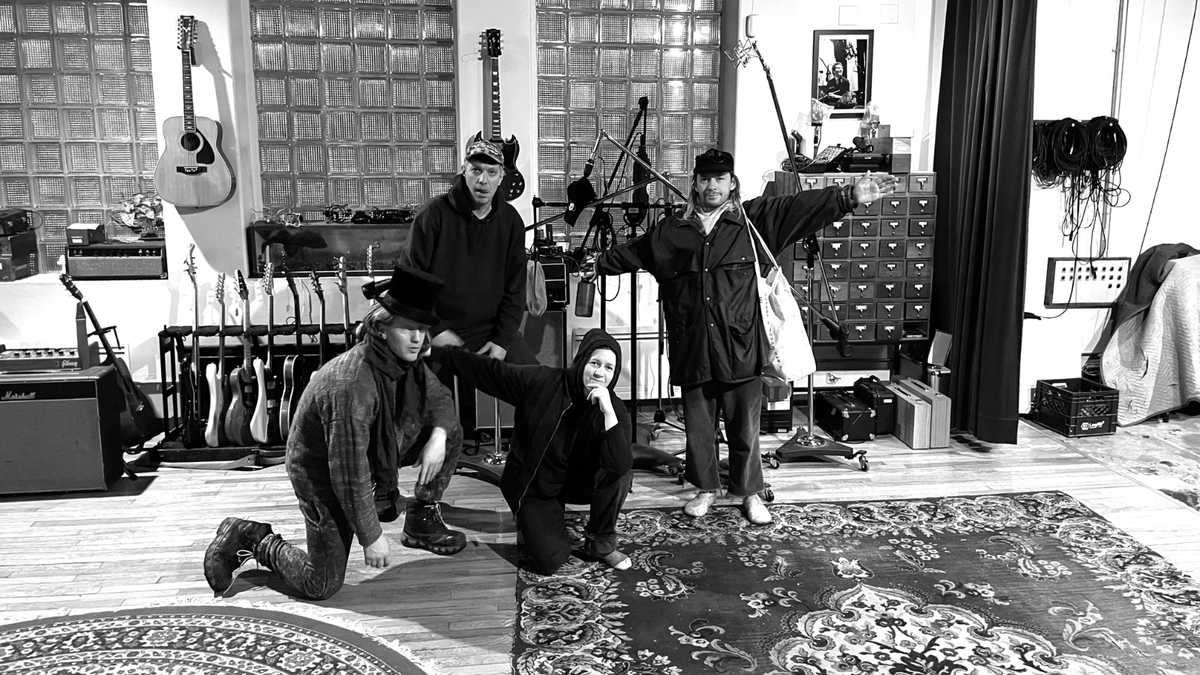
Schmidt may have stopped writing for a time, but they didn’t stop playing. After living in Toronto for 38 years, they moved to Sackville, New Brunswick in 2022 for a job at an artist-run centre. On the East Coast, they reconnected with Costello who had played in their Atlantic School of Spontaneous Composition backing band, and Nathan Doucet, another Toronto transplant, commuting two hours weekly to sit in and play with these musicians whose style is anything but country. “Nate has been in countless recordings. Every two weeks, he's like, ‘Yeah, they just did a reissue of this.’ And there'll be like some weird band that I didn't ever know existed,” they reveal, half-jokingly. “He's got a long history of playing drums in this region, and he's been playing since he was 11. Jeremy was trained classically as an opera singer and is an incredible synth player and a beautiful bass player, but they also both have played with improvisers for a long time.”
At first, Schmidt had no interest in bringing songs to the group to arrange, and instead just leaned in to improvising with them in sessions that often stretched for six to eight hours at a time. Gradually, the hours upon hours of improv started to give them the language and ability to imagine how their own songs might be arranged again. “I had marveled at improvisational music for a long time and never felt I was heavy enough to really get into it, but I did. And then I just started to love it,” they explain. “So I think when songs started to come back for me, in order to arrange the songs, I was able to imagine so much that had already been realized through our improvisation.”
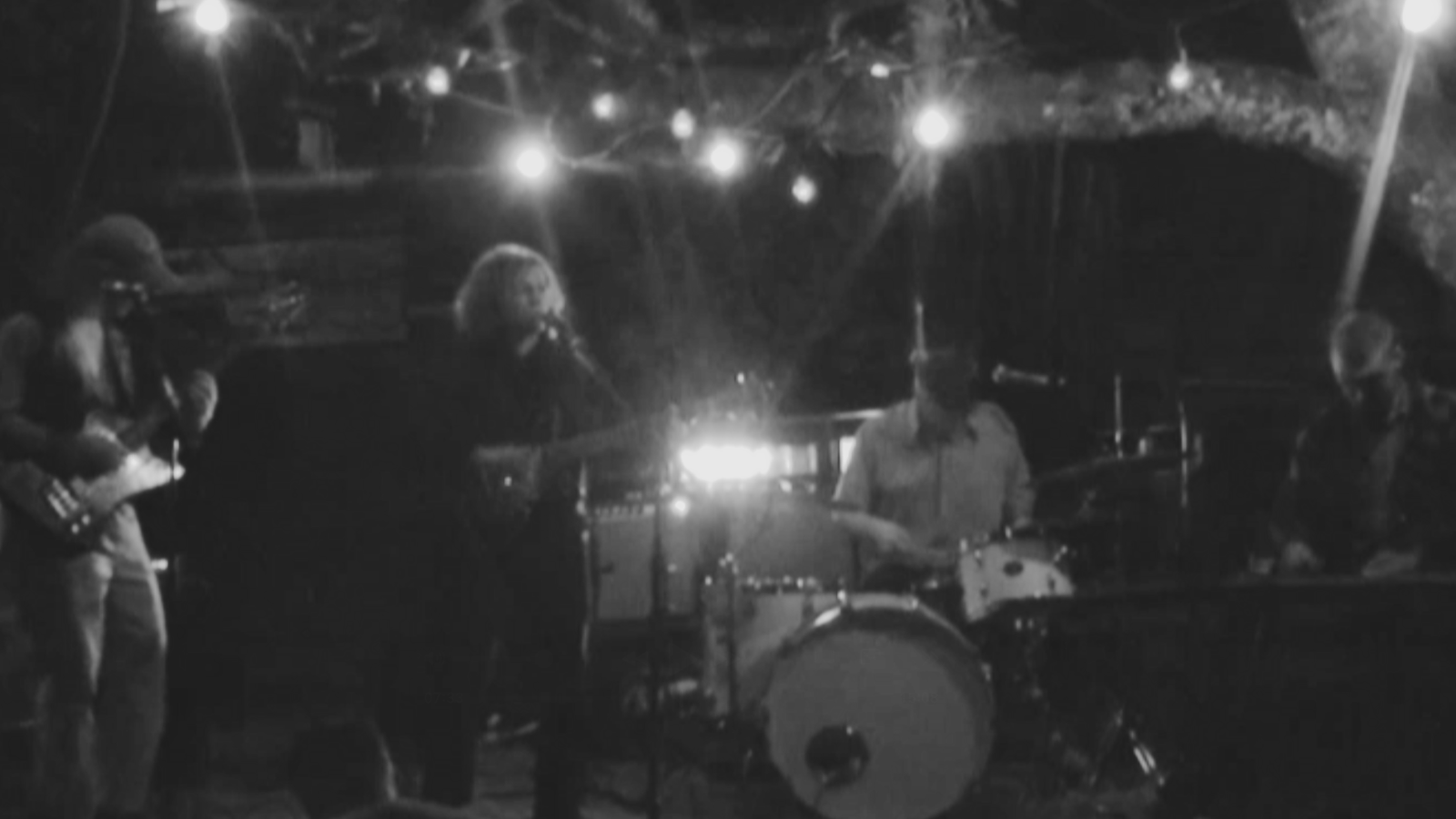
Filling out the “Fiver Trois” band is pedal steel player Dani Crowther, who plays in bicoastal alt-country band Townie. After scheduling some rehearsals together to see how they would all click, Schmidt recalls how immediately satisfying it was to hear their [tendencies]. “They have a lot more dexterity of tone than most pedal steel players that I encounter.”
The improvisational jams that first brought the group together also helped teach Schmidt how to make room for songs that resist repetition. “The songs are mostly crooked,” they explain. “Even though they are in a form, every verse is actually different.” The responsiveness of Costello and Doucet allows Schmidt to stretch vocally, finding space within arrangements that might otherwise feel restrictive. That way, the songs can “sit with ease, even though they’re not necessarily that easy,” they say. That openness also allowed the record’s emotional contours to emerge in unexpected ways. “Tomka Ton,” originally a playful jam written as an ode to Costello’s cat, became a moment of respite to follow the emotionally heavy “R.J.D.,” a song dedicated to several friends who had died. Over time, the relationship between the two songs took on a deeper significance for Schmidt, suggesting the possibility of release from grief as well as from a world in which so many people are denied the conditions to live fully. Both on Cleaning House and in live performances, they flow naturally into one another as if they'd always been written together.
Schmidt has described making the record as a kind of psychic decluttering, borrowing the ritual a psychic once prescribed for clearing the “stuck energy” from their apartment: gather together everything inherited from somewhere—or someone—else, draw a circle around it, and decide what is worth putting back.
One of the oldest songs on the record predates the Fiver project by about two to three years. “That’s a Joke” was a song from 2009 or ‘10 that was originally called “Life’s a Joke.” “I think I never really felt comfortable asserting that life's a joke,” they explain, and so they put the song away, dusting it off every so often. But with time, they returned to it, feeling that it still had some sticking power. The major shift happened lyrically, especially around the song’s chorus, where Schmidt reframes the “life is a joke” idea to “Life's not a game, that's a joke,” where the framework for understanding life as a game becomes the joke.
That sentiment seems especially relevant in 2026, as the gamification of life has manifested in platforms like Polymarket that reduce human outcomes to mere betting odds. The lyrics capture the grim reality of a culture that has digitized ambition to the point where the binary of winning and losing is no longer a metaphor, but a daily, suffocating architecture. “On a sociopolitical level, a metrics approach to success, gaming the system, hacking, you know — these things are deeply connected to the digitization of life,” they observe.
But if “That’s a Joke” rejects the idea that life can be reduced to winners and losers, it also makes room for another kind of play. Across Cleaning House, pleasure—be it laughter, music, the enjoyment of other people—doesn’t appear as an escape from the brutality Schmidt is describing, but as one way of refusing to let that brutality determine the full terms of living. Schmidt connects that shift partly to the increasingly naked cruelty of contemporary politics: “this place of fascism that we're at—the oligarchy, this clamoring to be part of these powerful people who don't care for others as performance, and so explicitly, is so appalling. It might have shifted my approach to laughter,” they explain. Faced with what they describe as a “full-spectrum” severity, their relationship to laughter changed. “To laugh at it is not simply to capitulate to it,” they reveal, adding that “there’s some kind of triumph of your attitude” in retaining the capacity to laugh, even while doing whatever else one can to resist.
Upcoming Fiver live dates:
Oct 29, 2026 - SURVIVOR: A song cycle based on the poetry of Tona Mills - The Bus Stop Theatre - 7:30 PM - Halifax, NS
Nov 9, 2026 - The Vault - 8:00 PM - Nanaimo, BC
Nov 10, 2026 - The Alley by Persephone Brewing Company - 7:00 PM - Powell River, BC
Nov 11, 2026 - The Gumboot Cafė - 7:00 PM - Roberts Creek, BC
Nov 12, 2026 - Green Auto - 7:30 PM - Vancouver, BC
Nov 28, 2026 - Dina's Tavern - 7:30 PM - Toronto, ON
Read more

Polo Lewis’s Propulsive Pop Channels the Warm Melancholy of Youthful Ennui

Exploring Esssena's Islands of Sound
