
Percussion’s Living Traditions in "Canadian" Music
Every culture has one or more “heartbeat” — a rhythmic pulse that acts as a foundation for the music of its place of origin. My first exposure to such a concept was as a child growing up in Jamaica at an annual event organized by my father, seeing people gathered in a circle around a table in a type of “ring shout.” They danced, stomping their feet as they moved counter-clockwise, chanting and singing hymns while the light of burning candles illuminated the room, casting phantom-like shadows on the walls. The sound of conductor whistles cut through the air while plastic water buckets became drums that rumbled to the beat. It was a ritual to thank the spirits and ancestors and celebrate life as the performers moved together to the Burru pattern — a rhythm permeating all of Jamaican music, today its ancient origins reach thousands of miles beyond the island I once called home.
“Drums is the thing that connects people’s spirit,” well known Jamaican percussionist Bongo Herman once said in a 2019 interview exploring the importance of percussion to the music of the island. “Back in those days in Africa, when you want to contact the ancestors, you used the drum.” Across diasporic communities, the physicality, accessibility, and adaptability of percussion make it a powerful vehicle for preserving cultural memory, and for transforming that memory into something new.
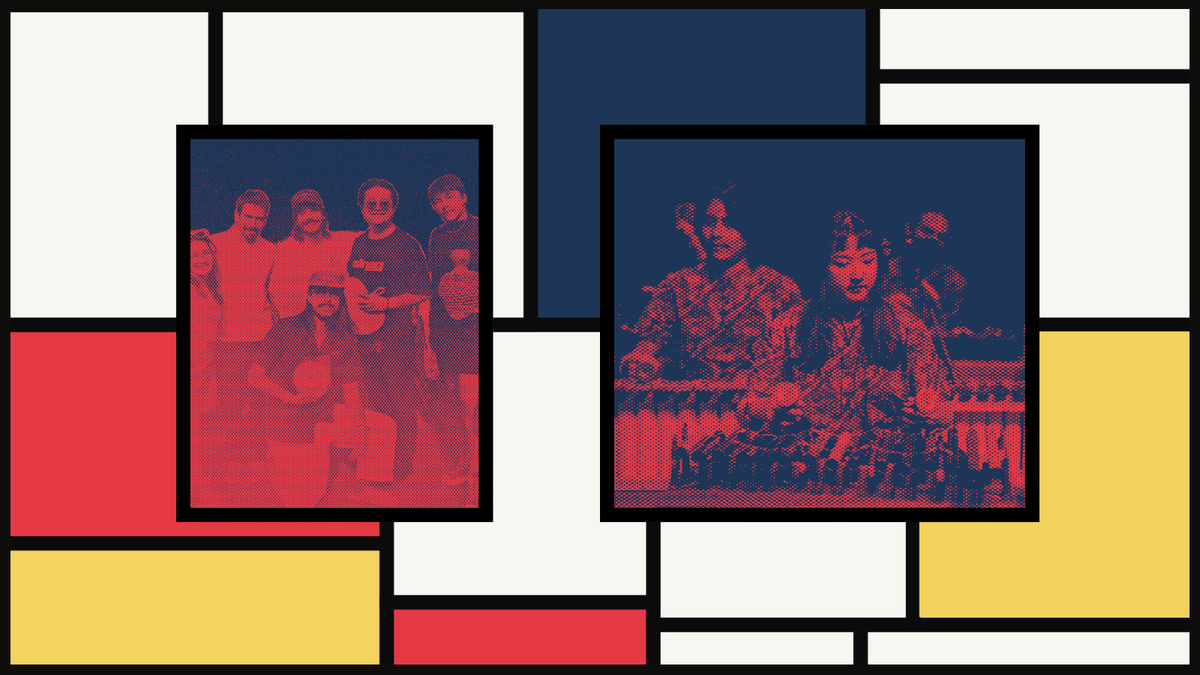
That process of preservation and transformation can be heard in traditional and ceremonial music globally, as well as in the work of musicians building something new from the rhythms they inherited. For Felipe Sena, a Brazilian-born multi-instrumentalist and leader of Toronto jazz fusion band Orbital Ensemble, percussion became a way of understanding music that extended far beyond the drum itself. “It just makes everything more lively,” explains Sena. “It just adds a bit of brightness that adds more excitement.”
Sena’s influences stem from exposure to a wide range of music from both Brazil and the U.S. In his youth, he spent significant time immersed in a São Paulo scene associated with maracatu (a variety of related musical, dance, and performance styles originating in northwestern Brazil with a strong focus on percussion ensembles) before coming up through Toronto’s jazz and Latin music scenes. “That was super foundational for me,” Sena reminisces. “I used to play basically a huge kick drum on my shoulder called an alfaia, ripping a lot of polyrhythms on that thing.”
Sena formed Orbital Ensemble as a collective of musicians from Toronto’s rock, jazz, and Latin music scenes. The relatively new group’s debut album, Orbital, was released in 2025, while its follow-up Contínua, was released this past summer. Together, the albums showcase the band's unique and complex mix of psychedelia and prog rock with jazz and Brazilian styles of pop, folk, and rock such as Tropicália and MPB (música popular brasileira, or “Brazilian popular music”).
This kind of deep integration of percussion with popular genres of music has precedent. It is not uncommon for rock, pop, hip hop, and electronic artists in the Caribbean and Latin America to incorporate acoustic percussion as a natural extension of their artistic practice. In the ’60s, popular Uruguayan band El Kinto mixed the Afro-Uruguayan style of candombe with ’60s post-Beatles rock & roll to create Candombe Beat. Mexican alternative-rock pioneers Caifanes have frequently mixed elements of traditional genres like cumbia into their new-wave and alt-rock sound, while Argentina’s Soda Stereo famously employed percussion in the breakdown section of their iconic song “De Música Ligera.” In Anglo-American rock and pop, percussion is often treated as an embellishment or supplementary texture rather than as a central defining element, but there have always been artists who have challenged that convention.
The integral role of percussion in music from the region often leads to a blurring of rhythm and melody, which can range from subtle to overt. “Those [patterns] are also kind of influencing how I play guitar or how I play the rhythms on the bass or the keys,” Sena says, referring to the influence of maracatu on his playing and songwriting. “I started emulating those rhythms or kind of translating those rhythms on these different instruments.”
Pitched percussion instruments like the Trinidadian steel pan, various lamellophones such as the mbira, and xylophones blur the lines even further. They can add rhythmic and textural spice to a piece, while also providing melodic and harmonic material.
“Sometimes there's specific instruments that are sounding the melody and then specific instruments that are making elaborations or ornamentations on the melody,” George Rahi, co-founder of the Vancouver-based ensemble Gamelan Bike Bike explains over video. “They're usually elaborating on the melody itself, but it kind of takes on this new quality. And that's because the parts are like divided into two. Then the rhythmic feeling of that interlocking part gets really complex.”
Gamelan Bike Bike are part of a relatively small group of gamelan ensembles in Canada that actively perform, record, and compose original material in addition to commissioning work from artists and composers from Indonesia. “Most of the music that we've commissioned comes from composers really steeped in the traditions of gamelan music,” Rahi says, “and also sometimes composers like bringing in different perspectives from maybe Western music.”
Since forming in 2010, they’ve released two albums and organized numerous workshops intended to introduce people in Vancouver and beyond to gamelan and encourage community participation.
Gamelan is a type of traditional ensemble music found throughout the Indonesian archipelago. It often features a range of pitched percussion instruments, including bells, gongs, membrane drums, and slit drums made of various types of hammered metal, wood, or even bamboo. The music takes a variety of forms to serve different purposes across the archipelago.
“The focus has been more so on contemporary gamelan music and then making space for younger composers and supporting their voices and visions in our projects,” Rahi says. “So commissioning work, performing, but also doing workshops and teaching with our instruments that people can get really hands-on and have that experience, in an accessible way.”
Gamelan became institutionally established in Canada with a showcase of Indonesian music and culture at Expo 86 in Vancouver. “The Indonesian governments sent a lot of musicians to perform here,” Rahi says. “Two of the ensembles stayed in Canada along with the instruments themselves. One went to Simon Fraser University, and one went to Montreal and became part of the university music programs.”
Since then, academia has been one of the driving forces for gamelan in the country, with many ensembles and composers connected in some way to those original universities. That landscape has gradually expanded as more groups have formed beyond academic settings.
Gamelan Bike Bike’s own approach reflects that freedom and open-mindedness. In their early days they would construct instruments from old, broken, and discarded bicycle frames and similar materials that Rahi would encounter working at a community bicycle workshop.
“It was like, ‘Oh, maybe we can use these kinds of frames. Let's roll raw materials,’” Rahi reminisces. “Which was kind of uncommon for sure in terms of the tubular shapes, and it presented a lot of challenges to building something that really worked together. Just like, ‘Okay, what's an accessible material that we have on hand that allows us to experiment?’”
Percussion also plays a role in spirituality and religious practices world wide. Drums, for example, have been used in some traditions as an aid for meditation through repetitive rhythmic patterns; bells and chimes can mark times of prayer or signal special occasions. Gamelan can likewise accompany ceremonies in some contexts.
“There is a really close connection to religious practices,” Rahi says in reference to certain gamelan repertoires, “so music as kind of an offering.” From our conversation, I can’t help but notice some parallels to Jamaica's musical traditions, where percussion ensembles have deep roots in religious practice, including Niyahbinghi drumming ensembles led by Rastafarians and the Myal drumming groups found in Kumina. In both cases, the communal experience of musicians performing interlocking rhythms can produce a meditative, trance-like atmosphere that at once calms the mind and encourages the movements that are typically part of those ceremonies.
“It's a way to celebrate. It's a way to dance. It's a way to keep roots and traditions alive,” Sena says.
Anything can be a percussion instrument if a sound can be made from it in the right context. That democratizes soundmaking while allowing ensembles to form even in the most dire and restrictive conditions. The steelpan and the Jamaican rumba box, for example, were born from materials that would have otherwise been discarded. Calabash drums found throughout West Africa offer an accessible and renewable percussion instrument that can be played in many ways.
Gamelan’s influence on much of modern music is a testament to its versatility. Much of 20th-century classical music was informed by the exposure of numerous western musicians to gamelan — from the minimalism of Erik Saite to the avant-garde compositions of Steve Reich, and later even Robert Fripp. It was also integral to the soundtrack to the 1989 Japanese animated sci-fi film Akira.
“It sort of seems like gamelan filtered through and was maybe really central to a lot of what's called, like, ‘innovation,’” Rahi reflects. “That cohort is kind of interesting in that there's this idea that that's an American invention, but maybe classically American — appropriating or reforming other traditions through some idea of the new.”
This history of gamelan’s influence on Western music is part of a much larger story about how musical traditions travel, change, and interact. African percussion, for example, spread across the Americas, West and South Asia, and Spain through the movement of diasporic communities, including through forced migrations, while musicians adapted inherited traditions to new cultural contexts.
Indonesian kroncong offers another example of historic hybridization. The genre developed during 16th century and fuses European influences and instrumentation with local sounds that continues to be performed and influence musicians across genres.
Today, gamelan and other traditional sounds, elements, and aesthetics are regularly mixed in with rock, pop, hip-hop, and other genres. Internationally, there have been efforts made by independent organizations, academies, and the Indonesian government to host and open workshops introducing and teaching gamelan to people all over the world as a way to spread awareness of Indonesian culture and traditional art with direct involvement from those that originated the art form.
The use of varied percussion is becoming more common in contemporary Canadian popular music, particularly among artists drawing from their diasporic roots. Alongside Orbital ensemble, in the indie-rock and punk realms, bands such as Yamantaka//Sonic Titan, Pantayo, and the OBGMs have all incorporated percussion instruments like steelpan, congas, bongos, and more into their songwriting. The OGBMs have also further incorporated the rhythms of drum and bass, new jack swing, and dancehall whilePantayo employs traditional kulintang instrumentation as an integral part of their sound. Electronic dance musicians have long had an eye toward percussion as samples in their songs with modern artists like Escobutt and Nadah El Shazly directly mix traditional percussion-heavy sounds with digital aesthetics and textures to comment on society in a post-digital age, while groups like Kazdoura seamlessly fuse psychelia, funk, and soul with the sounds of Egyptian and Levantine pop.
For all the forms percussion can take, its role can be remarkably consistent. A drum, gong, steelpan, bicycle frame, or electronic sample can become a means of connecting people to one another and to the places and histories that shaped them. Rhythm is extremely fluid, ready to adapt to any genre or style while being expressible through anything that can make a sound. Rhythms can be heard in nature from the sound of rain, woodpeckers searching for food, our own heartbeats, and so much more. Perhaps that is what makes percussion such a powerful foundation for music.
Rhythm is physical: it asks us to listen with our bodies as much as our ears. It can make a room move together, turn disparate sounds into a collective whole, and give musicians a vocabulary for translating one musical tradition into another. These elements make percussion a powerful means of communication, communal interaction, cultural survival, and transformation. It is a kind of universal language that everyone can understand on an instinctual level and translate into any context and situation, uniting people across diasporic communities with the traditions of their homelands while acting as a framework through which those same traditions can change, combine, and produce new genres and styles.
The musicians and ensembles I spoke with are carrying those sounds and traditions forward, adapting them to new circumstances and allowing them to change in the process.
As Bongo Herman put it, the drum connects people’s spirits. From the ceremonial circles of Jamaica to São Paulo’s maracatu communities, Vancouver’s gamelan workshops, and the increasingly diverse sounds of Canadian popular music, that connection continues to reverberate.
The beat may change, but the pulse remains.