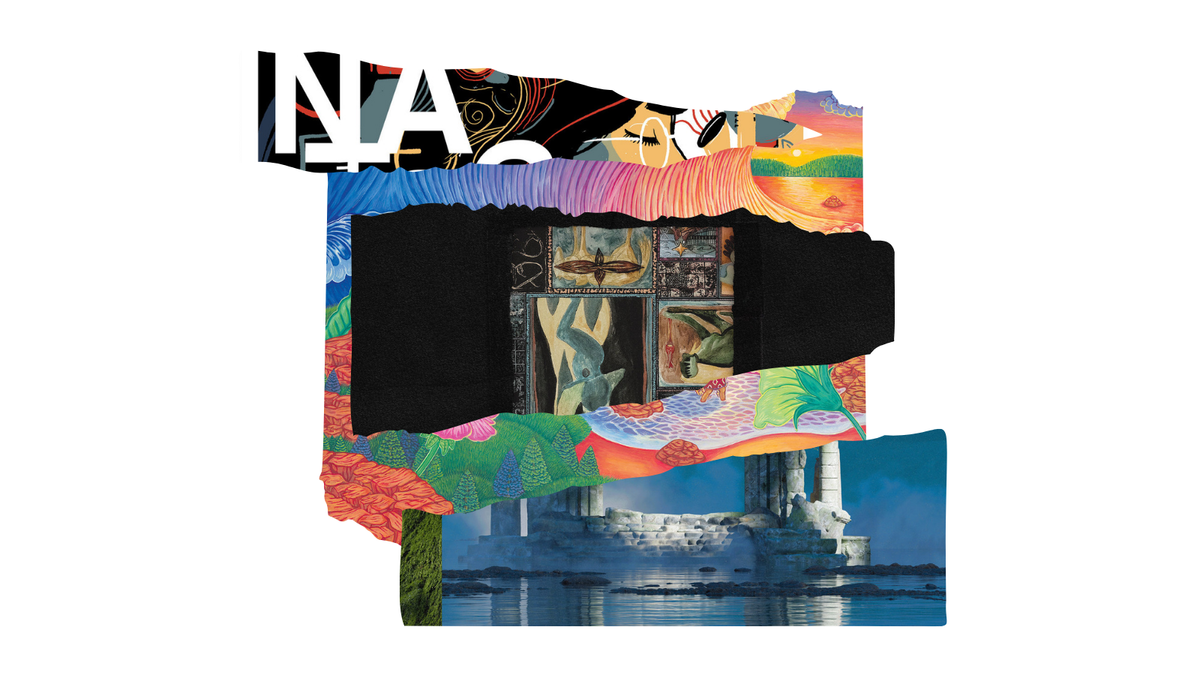
Mind the Gaps: A History Told Through Borrowed Lines
The ground is shifting beneath the live-music industry, and building a career has never felt more precarious. Independent artists are up against generative AI, corporate monopolies on venues and ticketing services, and changing consumer habits. Faced with a steady stream of tragedy, listeners and artists alike have every reason to use entertainment as a mere means of escape. Rather than give in to the existential threat, these four artists are doing what no robot can; sounding their human experience.
By selecting excerpts from four musical artists from Turtle Island and placing them in conversation with one another, I point and shout with great enthusiasm to the ways in which different voices can question what purpose can be gleaned from facing bleak reality in song. Piecing bits of lyrics into a shared context, I hope to draw attention to how the works of different artists can speak to one another and the collective attitudes emerging at the end of the world as we know it.
Density and the Angle of Incidence
Music-making is the domain of taking risks. In physics, a domain is a discrete region of magnetism. What one artist says/sings/plays affects and is affected by the naturally occurring electricity in the environment, including the subliminal information coming from the physical bodies of the artists and technicians themselves. The angle of incidence refers to the angle at which sound waves strike a surface much like light hitting a mirror, which impacts how the signal will sound at different points throughout the room. This is a fundamental principle in the recording process, which involves a series of small risks: how a technician places a microphone, and how a singer revolves around it. Music is the emergence of these live human experiences.
In audio mixing, “density” refers to the quality of convergence occurring between elements of a song, including frequency ranges, amplitudes, and instruments. The stereo field can be thought of as the space from one ear to the other, where individual elements are forced to overlap and coexist. If that space becomes crowded with elements that are stacked too closely together, they can end up competing or canceling each other out altogether. It’s essential to understand and respect the relational nature of these elements.
“Can you hear the quiet? / All’s not lost” / “Try to remember you are part of something / Try to remember you are part of something” - Thanya Iyer, “Waves/Hold/Tied”
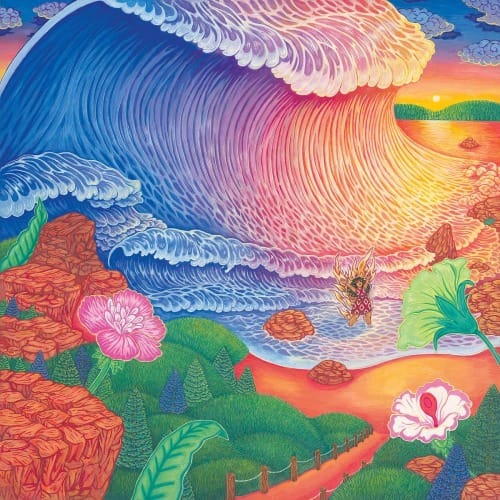
“Waves/Hold/Tied” is the three-part closing track on Thanya Iyer’s 2025 album, KIND - TIDE/TIED, which “navigates the rhythms of communal identity, healing, and loving, within a dissonant world.”
Each lyric, bow pull, and slight shift in mic placement is an array of human relationships making themselves known. When each of these elements and the relationships between them are considered carefully, it widens the listener’s perspective. Tension and release can communicate individualities more effectively while leaving vital breathing room for emotional affect. The delicate balance between nothing and everything is how music produces feeling.
Choosing your audience even if they can’t hear you
Technology and production processes have changed, been honed, and left little room for emerging or even established independent artists to make a living. Professional artists have had to write to appeal to the algorithms that have taken over media consumption over the past 10-15 years, just for the chance to reach audiences. While it’s not news that the industry values popularity and productivity over the wonders of diversity within each detail of the creative process (oops, my bias is showing), there is a rapidly devolving shift that is out of human hands but influencing human possibility.
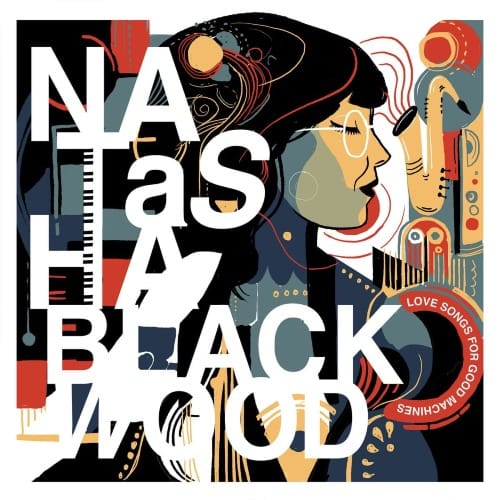
On her 2024 album, Love Songs for Good Machines, Newfoundland-based self-proclaimed “music maker, move and shaker,” Natasha Blackwood draws attention to the impossible standard artists are held to; to perform a constant stream of productivity all while projecting an artificial image of commercial success. You can hear the collaboration on “Good Machines”; how the drums, bass, and baritone saxophone with a lower range of frequencies are placed further back in the stereo field, while the mid-range guitar and tenor saxophone trade off on taking over the melody, and the trumpet adds embellishments to the high-range. All the elements leave room for the vocals to have a human moment of questioning.
“If I put my heart in the showroom, and I say that she runs like a dream / will you validate me, say I’m a good machine?” - Natasha Blackwood - "Good Machines"
With generative AI now churning out “songs” and monopolizing space on streaming platforms, the nature of what is appealing to the masses is regressing into an even more homogenous stream of content. The danger is further devaluation of human agency.
It seems independent artists are more commonly and urgently contemplating, who is this for? When the laborious, expensive, time-consuming parts can be bypassed, the question of “why” and “how” must be met with intention. Whether that intention is politically motivated or simply to enjoy the process, the future of music depends on our participation. Making music in this climate requires vision, dedication, and gall.
Listeners respond to music that resonates with an emotion or experience communicated in a piece of music. Being vulnerable is a human skill; taking accountability for one’s own work and ideas, and choosing to let others perceive it even though it may be imperfect. When questioning what a human musician can do that a robot can’t, the most satisfactory answer I can come up with is to be brave.
Repetition and return: Remembering how to be good receivers
Body, space, positionality
There is a difference between collecting data and listening. The role of the receiver may obviously apply to a music listener, but it is also a vital role a music maker must inhabit, and does, by default of being a human being with a physical body in a physical environment. While machine learning involves locating, organizing, and regurgitating information, listening with the human senses, with other people and other objects is “a way of making yourself a little more tangible; as a being, as a receiver, as a body,” says Edyta Jarzab in conversation with Henry Anderson.
Going back to the idea of density in audio mixing, the power of relationality is its ability to engage and release tensions. This attention to non-resolution or partial resolution is what draws listeners in because, well, it’s the one thing we can all relate to.
Seeking and discovery is also an important part of the value music has in our lives; another process that’s being phased out by generated playlists that tell you “what you like.” The less we choose for ourselves what we listen to, the more idle we become in creating our future, but sharing music is an opportunity to connect.
“If we allow the love and light in / we’ll save it / there’s at least no harm in trying / it’s mystifying / Gonna love you when the world is dying” - Mappe Of - "Honeyhaze"
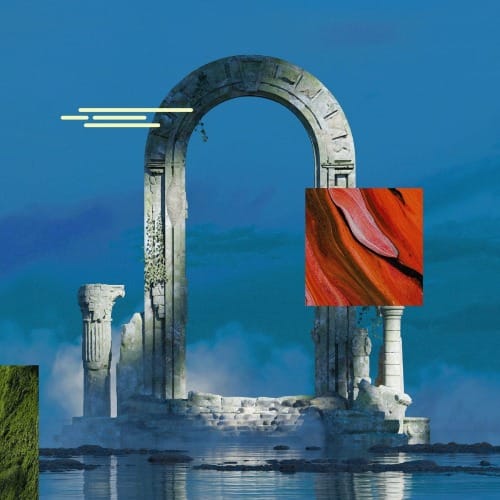
As artists choose to voice their own realities in songwriting, they create opportunities for people to relate to one another and their environment. Sound and voice researcher Eleni Ikoniadou writes on the importance of sharing knowledge via vocalizations of grief: “Though words may be spoken, there is another level of significance, in the gaps where speech is either lost or becomes irrelevant; as “voice devolves into inarticulacy, a moan, a cry: vocal expressions at once sorrowful and joyous, otherworldly and therefore extremely dangerous.”
Lyrics dealing with existential questions and calls to action have the power to reflect and augment the history unfolding through current events. Making music with fellow humans is a threat to the hyper-individualism brought on by the digital age because it counters the incessant messaging from tech companies that says we don’t need each other, by offering an instant solution to everyday tasks. On the contrary, when we make, listen to, or talk about music, we strengthen social ties and begin building experiences together.
Death and life and life
The trajectory of history is malleable. As the past decade has demonstrated, catastrophe isn’t a sudden, singular event, rather a cluster of culminating breaking points breached only after a series of tiny actions, inactions, and chance.
Just like the bridge of a song, or a moment of dissonance between instruments, the deformation of what was once thought to be a stable foundation shakes our expectations, forces us to learn, and requires us to find somewhere to land.
Music offers a unique way to occupy the uncertainty. Author and professor, Saidiya Hartman, suggests, “The intent of [lamenting in song] is not to give voice [...] but rather to imagine what cannot be verified, a realm of experience which is situated between two zones of death–social and corporeal–and to reckon with the precarious lives which are visible only in the moment of their disappearance.”
Artists engaging with the existential volatility of the moment are communicating our terrifying reality, and in doing so, effectively shifting the course of history; questioning and never answering conclusively. The gaps created in this process are the necessary spaces that make way for the filling process to begin anew and generate new potential.
Song form allows history to reinvent itself, as Ikoniadou puts it; “To allow it to happen once more but differently.”
Playing with liminal space, Bibi Club says “Amaro is an immortal between life and death, a place where we mourn. The song unfolds as an invitation to open up, to let loose, to dance, to push beyond oneself, to become greater than oneself, and to touch on fundamental aspects of humanity: grace, love, eternity.” The hypnotic drumbeat and repetitive guitar riffs evoke a timelessness, disrupted by a siren-like break that signals a shift in perspective before returning to the main beat with a little more urgency. “Amaro explores the liminal spectrum between the here and beyond, pointing to love, nature, and community as the unifying purpose.”
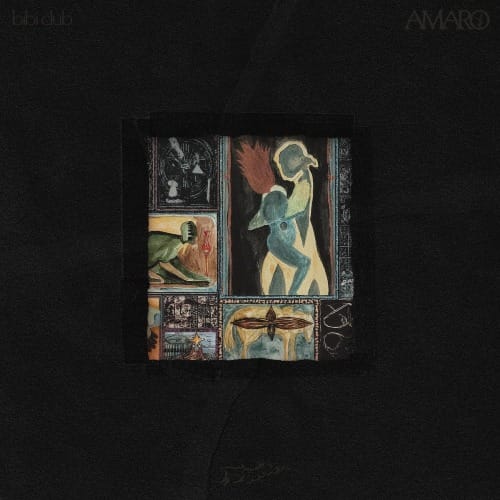
“Le coeur est un lieu qui ne meurt jamais / Ne meurt jamais” (“The heart is a place that never dies / Never dies”) - Bibi Club - "Amaro"
Closing thoughts
While most artists are striving to reach more listeners and make a living, producing music isn’t just about landing a hit. A results-driven project is still realized through slow processes that simply can’t be reenacted via data servers. Artists making music in the face of fascism, human erasure, and climate collapse are inhabiting the gaps in the narrative that says human skill and emotion is becoming obsolete. It is also the job of listeners to meet them there.
In transition to a post-digital world, the relational significance of human-made music can’t be overstated. As steps of music-making are offloaded to machines, bits of human experience are lost; information that evokes emotion in listeners and promotes attentiveness to the impulses that tether us to our shared humanity. Will we see an analog renaissance? A resurgence of physical media pressed and passed between friends? We might just have to go digging through crates of vinyl and asking our friends, or our friends’ dads what they’re listening to.
Just like the bridge of a song, or a moment of dissonance between instruments, the deformation of what was once thought to be a stable foundation shakes our expectations, forces us to learn, and provides an opportunity to find somewhere to land. The good news is we’ve been there before.
Sources:
Biserna, Elena, ed. Going Out: Walking, Listening, Soundmaking. Brussels: Q-O2, 2022: 335, 449, 453.
Hartman, Saidiya. "Venus in Two Acts." Small Axe 12, no. 2, 2008: 1-14.
Peter of Petite Pete
Read more
What Does Sampling Mean in An Era of Instant Music Generation?
Singing Heavy Songs