Singing Heavy Songs
How heavy music heals and unites Indigenous people on both sides of a border
CW: suicidality, trauma, colonialism, genocide, racism
“I grew up watching wrestling,” Carlin Black Rabbit tells me in a Second Cup across from PinBar, a small Calgary venue where he’s about to play a fundraiser gig for a local food bank. “And wrestling has a lot of crossover with metal and punk. Hearing a lot of nu metal in the early 2000s, or hearing a theme song of a favorite wrestler, really kind of opened the door for me to get exposed to heavy music.”
Carlin is the drummer and bandleader of the hardcore group No More Moments (tonight’s gig is the first with a brand-new band lineup), as well as the stoner metal outfit Iron Tusk. He’s been putting on punk and metal shows in his hometown on Siksika Reservation No. 146, about 45 minutes east of Calgary, since he was 16.
“Living on the reserve, I didn't have transportation or accessibility to go to concerts or shows,” he says. “I didn't know that world existed here in the city, so I just kind of took what I could get. And there were bands that existed on my reserve. They’d have shows in, like, old hockey arenas, and that kind of just kicked off my love for it.”
In 2015 — just a year before he became the youngest-ever elected member of Siksika tribal council at 24 — Carlin founded Moments Fest, an annual weekend-long punk and metal festival that takes place on the rez. Headlining acts have included Mares of Thrace and METZ, but lineups predominantly consist of smaller punk and metal acts from around western Canada. Beyond just the performances, Moments Fest also offers volunteer opportunities and mentorship programs.
“A lot of the youth are learning,” Carlin says. “They can learn how to do photography, or production — learn how to set up a stage or sell merch. We really try to give back in any way we can.”
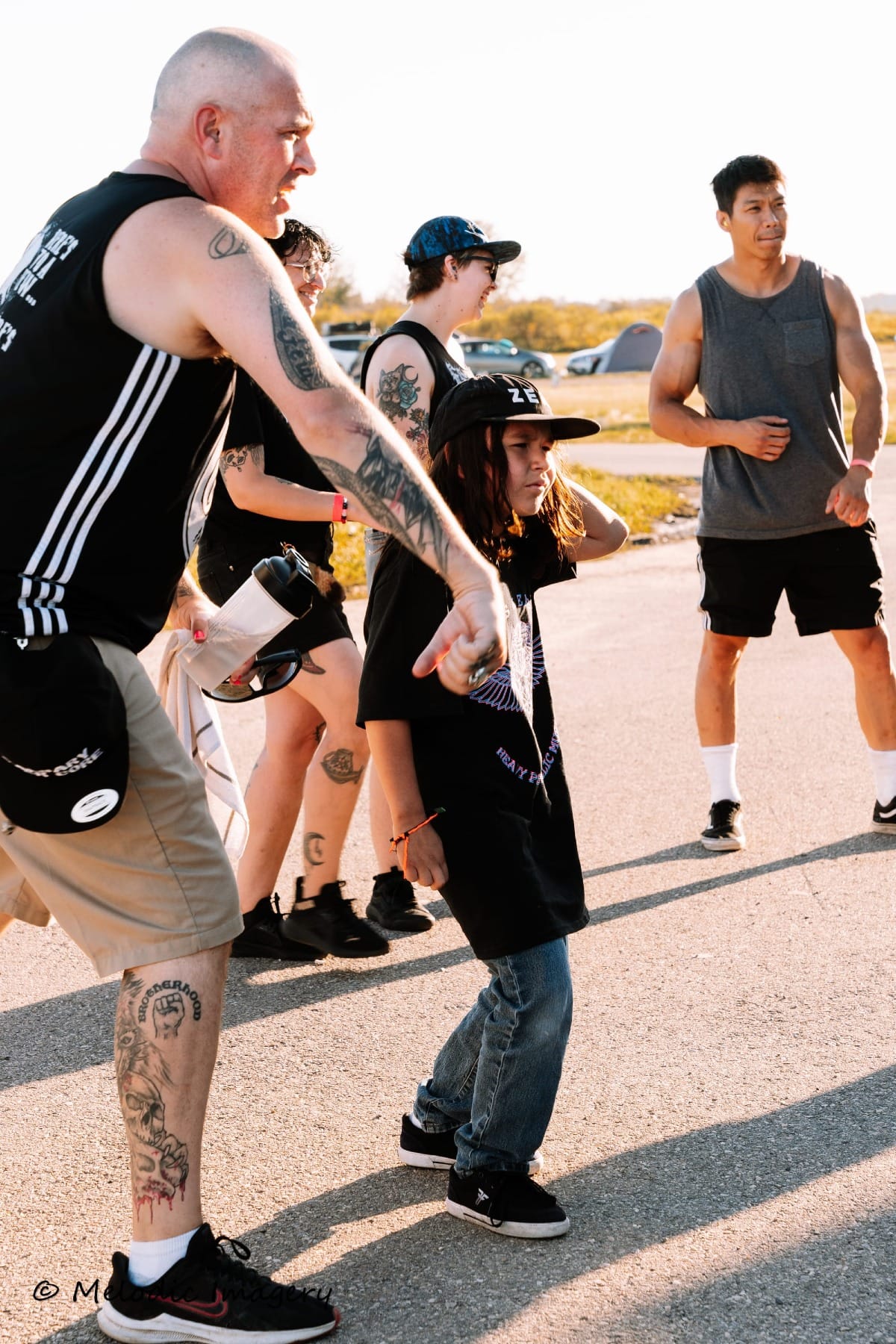
Carlin acknowledges that, despite the rise in awareness of Indigenous issues, racism and prejudice still rear their heads when it comes to putting on events.
“You see a lot of folks who are on the streets that are Indigenous. So the average person may think, ‘Well, every time I see an Indigenous person, they're like that — they're drunk, or they're whatever.’ I’ve felt that in some spaces years prior and I never paid attention to it, but you feel it,” he notes.
“Thankfully, Calgary has been such a vibrant and accepting community for me. I mean, obviously there's work that still needs to be done, but when I came to Calgary I got lucky — I was kind of ready for it. But I have friends and family that come to shows, and [much] of the time they've had a bad experience. I'm not gonna call anyone out, but there's just certain places we don't go because we've heard, ‘Don't go there, because they don't treat our people well.’”
Still, he remains resolute. “It took 15 years to get to where I am because I wasn't gonna let racism or discrimination or people treating me different because of my skin colour push me away, you know?”
For Carlin, heavy music has a healing factor beyond its entertainment value or even the community-building properties that any local music scene might have.
“It's healed a lot of the hurt in my life. Especially when you live in a First Nations community where there is a lot of misfortune … in terms of people passing away, people getting sick, just a lot of the real social realities of our First Nations community. It can really wear someone down. And once you fall in that path where you're depressed, or you're just in survival mode, music’s like a light at the end of the tunnel.”
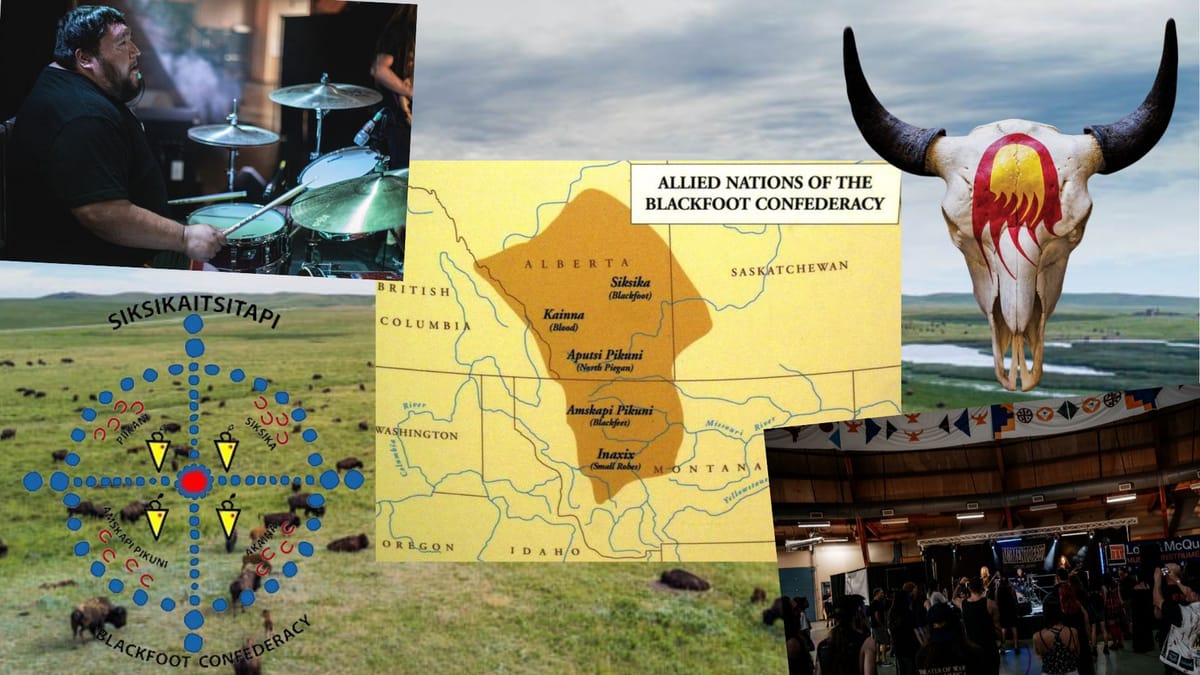
The Siksika Nation of southern Alberta are commonly known in English as the Blackfoot. Just across the U.S. border in Montana, on and around a reservation nearly the size of Delaware, one finds the Southern Piikuni, a.k.a. the Blackfeet — it’s not a coincidence. Along with the Northern Piikani (a.k.a the Peigan) and Kainai (a.k.a. Blood) tribes, they form the Blackfoot Confederacy, who have a tradition going back to time immemorial of using music and songs for healing purposes.
“Doctors would sing songs as they were healing people,” says Robert Hall, Native American Studies Director for Browning Public Schools, the Blackfeet Reservation’s main school district. “And these songs were not just sung to help the doctor concentrate. These songs were sung because they were of medicinal origin.
“For thousands of years, the people of the Blackfoot Confederacy have always had this scientific approach,” he adds. “Thousands of years of trial and error to discover and to see that music has healing components — and it does.”
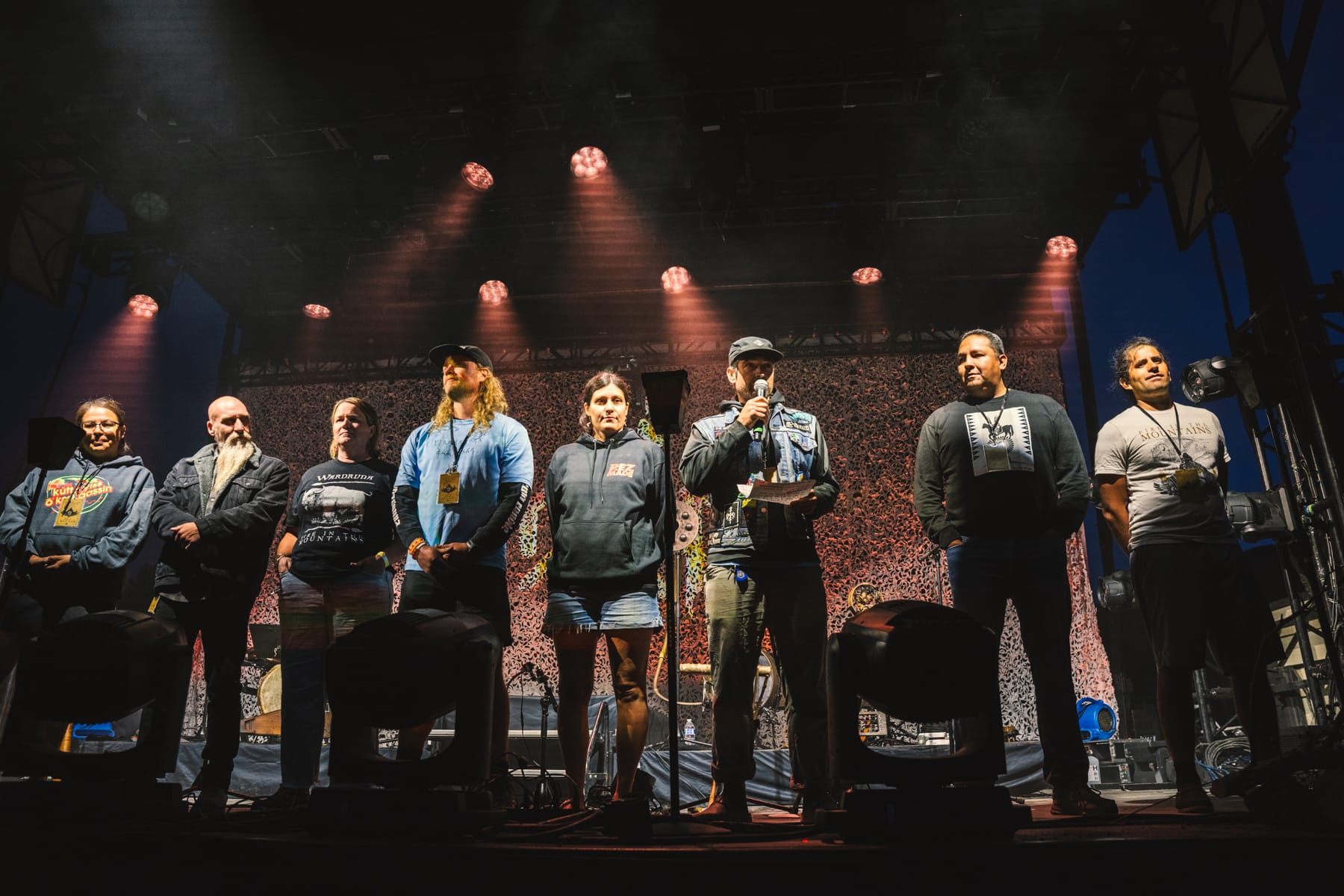
Robert sits on the board of the Firekeeper Alliance, a nonprofit organization dedicated to reducing suicidality among Piikuni youth. Montana has the highest suicide rate of any U.S. state, and Native Americans die by suicide more than any other racial demographic in the country. What distinguishes the Firekeepers from other such initiatives is its focus on fostering a love and appreciation of heavy music and its fandom.
“A beautiful coincidence is that our word for doctoring translates to ‘singing heavy songs,’” Robert says.
The Firekeeper Alliance was founded by Charlie Speicher, a counsellor at the Buffalo Hide Academy in Browning (“downtown Browntown,” as he calls it), the largest community on the Blackfeet Reservation. Charlie is non-Indigenous — “99% Irish”, he says — but has been living in the community and working with Piikuni youth for 18 years.
The Firekeepers work from a “strengths-based” counselling model, in which suicidal ideation is treated not so much as an urgent medical emergency, but rather as an understandable and even natural (if undesirable) reaction to one’s own difficult circumstances.
“Experiencing suicidal distress is way more normal than most people realize,” Charlie explains. “And once we help our students and the people we're counselling understand that you're not broken, you're not crazy, you're not damaged goods, that in and of itself can reduce so much pressure.”
Charlie sees heavy music as another way of acknowledging and confronting uncomfortable emotions and experiences.
“Most of the bands I listen to — and a lot of my musical heroes — talk about suicide in their music, and they talk about their depression and their anxiety. They go toward it, and it's not this mysterious forbidden thing that is too scary. This type of distress is integrated and brought into the fold, and defanged, so to speak.”
Charlie’s love of metal and work with the Firekeepers were the reasons that the Blackfeet Reservation became the new home of the annual metal festival Fire in the Mountains in 2025. The festival was previously held on a ranch in Grand Teton National Park in Wyoming, until the owners of adjacent properties filed noise complaints. Some of the festival’s lineup is now curated by the Firekeepers, who also facilitate workshops and seminars during the event.
“The reason why the festival happened in Blackfeet Country is because I have an attractive cousin,” Robert quips. “Charlie moved here because he saw my cousin one day and fell in love with her. And he's a big metal fan, and he was going to the Fire in the Mountains festivals and coming back to the rez afterwards. They were a landless music festival and Blackfeet, we're generous people. And we talked to some council members, and as soon as we said it's for youth suicide prevention, they said, ‘we’re all in.’”
Amid the Satanic Panic a mere four decades ago, records by acts such as Ozzy Osbourne and Judas Priest were often blamed for causing youth suicide. The irony is not lost on the Firekeepers.
“Indigenous people are no strangers to being called devil worshippers, eh?” says Robert. “We have a collective memory of being called devils. And so it doesn't scare us.”
Robert is, himself, not a huge fan of metal — he prefers the Beatles — but admires the fandom for the sense of belonging it offers.
“One thing I really appreciate about the metal crowd, and the Indigenous people in there, is that they're not tokenized as ‘Indians.’ They're just like, ‘Oh, I fucking love this band’, you know? They're not like ‘Indian bands,’ they're just heavy metal bands that are Indigenous,” he says.
“There are probably musicologists out there that could explain why it is that a marginalized community that has experienced genocide is gravitating towards heavy metal.. Part of it is because this music is angry... So rather than being angry at the walls and at human flesh, you channel that anger through your ears — and then you can channel it toward productivity rather than through violence. Because anger is useful for us. All human emotions have their place in our lives, and if we ignore that, then it builds up and weighs us down.
“I don't think we, as Blackfeet, own music as a medicinal experience,” he cautions. “I mean, it's universal, you know? Aliens across the universe probably have found healing through music.”
Back in Alberta, Carlin is pursuing an education in business administration now that his time on the Siksika council has come to an end. His previous academic background was in social work, but he no longer wants to take part in a profession that, in countless cases, has been used to tear Indigenous families apart.
“I wasn't re-elected for my fourth term, which comes with mixed feelings, but you know, I'm adaptable.You can put me in any situation and I’ll thrive there,” he says.
“I was just transferred a headdress,” he continues, “and that's the highest honour you can receive as a Blackfoot, higher than any position as a council member. A lot of people go on living their life without getting a headdress. So to get a headdress — a Blackfoot war bonnet — at 33, it is the highest honour someone can get. It's the most significant thing that's ever happened in my life.
“And it really reignited something in me where I have that warrior mentality, because that's the whole process of getting a headdress — you go through a transfer, through ceremony and protocol. It was done in front of 500 people. So my community witnessed it. It's like the Stanley Cup, or the Super Bowl ring. No one could ever take that away from me.”
The success of Moments Fest has also earned Carlin some influence on other nearby cultural events, such as Calgary’s Sled Island and Edmonton’s Purple City Festival. There’s even talk of a new Indigenous-focused festival that’s in the planning stages.
“I'm starting to be invited to more of these tables within Calgary and beyond,” he says. “And they want real feedback from Indigenous people. And they're focused on diversity and inclusion — like real, authentic work, where it's not a checkmark kind of thing.”
Recently, the Firekeepers have also been in contact with Carlin about forging a connection with Moments Fest; he’ll be going down to the 2026 edition of Fire in the Mountains to lead a workshop.
“I’m excited to see what opportunities and connections can happen with Moments Fest and Fire In the Mountains,” he says. “We need to show the world we are still here — our fire still burns, and our spirit’s alive.”
Read more
What Does Sampling Mean in An Era of Instant Music Generation?
Arielle Soucy Finds Freedom in the Wake of Grief on the Poignant 'Passages'