Art Under Capital and Beyond It
There’s a framed piece in my apartment that gets more comments than any other art hanging on my walls. It’s not really a piece of art at all, but a testament to my own creative output: a certificate from SOCAN, celebrating my first ever royalty cheque for my music, at a grand total of $0.92. I did not make this certificate myself; SOCAN, the performing rights organization for Canadian songwriters, mailed it to me. When someone mails you a certificate for eight cents less than a dollar, all you can really do is frame and hang it. (Per my understanding, SOCAN no longer sends out these certificates).
Initially a little embarrassed by it, I’ve grown to love the certificate, not just because it’s a conversation piece. It’s a reminder of my own vast insignificance in the realm of artistic contributions to the economy (and my own bank account), but also that there’s an amusing absurdity in trying to make a living as an artist. Artists are more or less expected to take their pennies and keep on toiling, because art is a calling, not a commercial career—in fact, commercialism has historically been perceived as a stain on true artistry. It’s a punishing paradox.
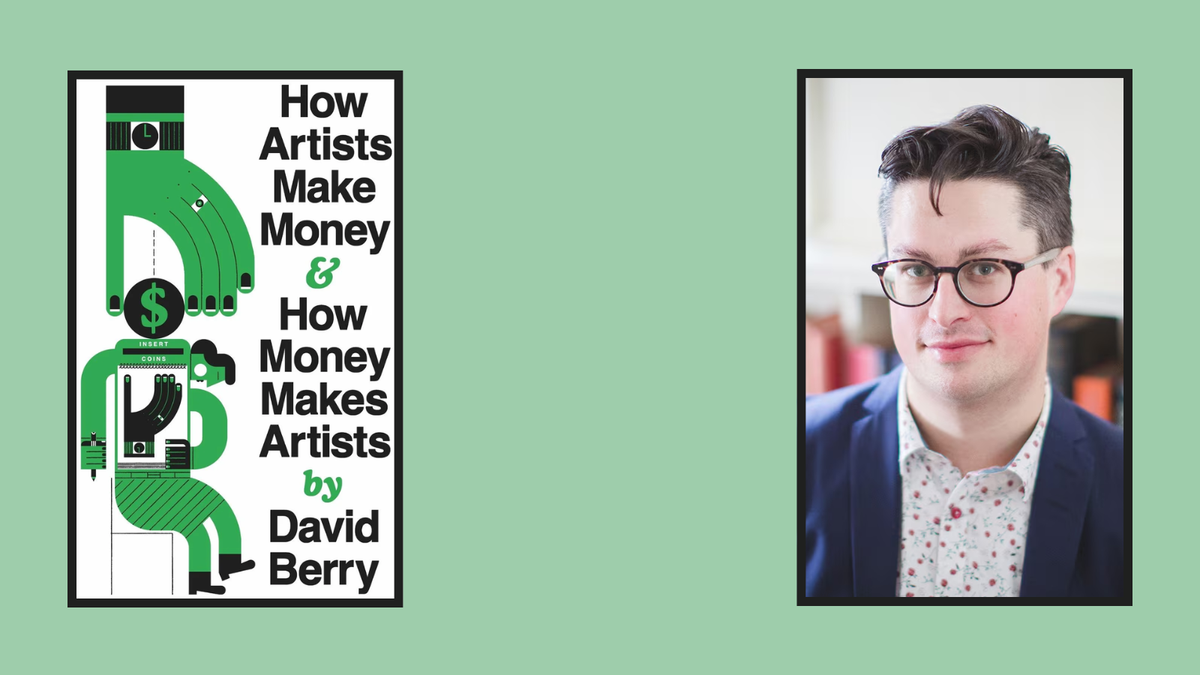
Writer and critic David Berry tackles this paradox in his 2025 book How Artists Make Money and How Money Makes Artists. Witty, honest and deeply cynical, Berry takes a considered look at the past and present of how artists have turned dreams into dollars. It’s a topic that has gained recent prominence, amidst worsening conditions in cultural industries. From the Hollywood strikes of 2023, to musicians’ campaigns against Spotify’s poor streaming payouts, to fears about AI-generated art increasing the devaluation of artistic labour, artists are making noise about their imperiled state. Production costs are high, consumers are used to getting their art for free, and heavy corporate monopolization seeks to scoop up what little revenues do drip through.
Berry’s book is not exactly cause for hope. Instead, he takes stock of how we got here. His core argument is that money overdetermines the making of art, imposing conditions that shape what gets made and why. “Art is what the people who pay for art say it is, and artists are the people they pay for it,” he writes in his introduction. “Anything else is an argument in search of a patron.” It’s a bleak sentiment, but Berry’s honesty about the economics of the arts is refreshing, and his book takes on a broad scope that provides some contextual comfort. It’s a reminder that as bad as the current moment may seem, the conditions for artists have never been ideal—for as long as money has been around, artists have had a raw deal.
How Artists Make Money is structured around the various financial models that have kept artists afloat throughout history. Berry argues that while artists were once considered instruments through which we could connect with the gods, money has helped to invest artists with god-like status themselves. The patronage system saw wealthy nobles financing artistic careers because art was perceived as a means of enlightenment. Artists who succeeded in this system were skilled at presenting themselves as noble and virtuous. That is perhaps not so different from the artists who succeed under another model Berry highlights: government funding. The artists rewarded by governments, as with those who flourished under patronage, are those who serve the socio-political aims of the funders. Berry writes of the Massey Commission, which led to the founding of the Canada Council for the Arts: “this was the country’s elite codifying the trappings of their social class as the national interest.”
Then there are the artists who turn to the market for their funds. Berry notes that the music industry is particularly well-suited to this arrangement, calling music “the form that has really excelled at using creative expression as seed capital.” He swiftly covers the history of recorded music and its unholy matrimony of artistic expression and market logics, through the lens of David Byrne. Berry argues that Byrne was well-suited to a career in music in part because he came along at the right time—record sales were high, local bars booked bands every night—and in part because he possesses a talent for balancing his budgets. (To anyone who might find this an unfair view of Byrne, that’s part of Berry’s project—he wants the reader to feel what it’s like to have artistry reduced to market strategy.)
In Berry’s view, the issues with the streaming landscape are just an intensification of these logics. “If this is dire – and the fact that any musician below super-star level has almost no way to make money off recording seems pretty dire – it is only an evolution,” he writes. “The market has always been set up to reward an increasingly small percentage of actual artists.” This is one of the biggest strengths of How Artists Make Money. For all the headlines about dying cultural industries, Berry reminds us these are not new problems. Berry emphasizes that only a small set of artists—10-20 percent, based on his research—are able to fully support themselves from their art, a number he guesses is actually fairly consistent through modern history.
Art has always been a compromise for its makers, something you either squeeze into the crevices of time outside waged-labour or sculpt into fodder for available funding options. (Most of us do some mix of the two). The biggest threats to artists today are broadly the same as the threats facing workers in general: wages that don’t match the cost of living, a managerial class siphoning off the surplus value produced by those at the bottom, a housing crisis produced by the financialization of property. “The vast majority of artists have always required some sort of side hustle. We don’t know what future there will be if even the safest havens are just as brutally unforgiving as the art world itself,” Berry writes.
Berry correctly diagnoses this problem, but is less directional about solutions. Though he provides an excellent overview of the fraught history of unionization in the music industry, his answers to the all-encompassing issue of money aren’t as focused on collective action or equality-based policy. A parenthetical about Universal Basic Income is tacked at the end of a paragraph about how more artists should be open about the family support they receive. (He’s not wrong about that, either, and he leads by example in the book, providing a thorough accounting of his own finances and outside supports.)
Part of the solution can also happen at the conceptual level. Berry’s book is an effort to see the world as it is, where money defines what it means to be an artist. “Anyone at all can make art,” he writes, “but you only get to call yourself an artist if you’re paid for it.” Operating under this framework, Berry wrestles with his own existential struggles with the concept of being “an artist.” “Is my complete inability to support myself through standard capitalist means,” he asks, “definitive proof of my unworthiness as an artist?”
I understand the anxieties underpinning the question, but I think it proves the need for a different definition of the artist altogether—one that is less concerned with monetary goalposts and mass consumption and more with community. This is perhaps because Berry is a writer, one of the more solitary forms of art-making, but the book in general leans towards an individualized understanding of art. Berry describes art as something that emerges from within and must be externalized. That can certainly be true, but art is also something that happens between people: songs passed down amongst generations, stories told to friends or lovers, letters written in a furious heat. Re-framing it as a communal process can help take some of the sting out of $0.92 royalty cheques, and reminds us of the artist’s origins as a conduit—or, to borrow from electronic artist ASKO’s “nôkosiw,” a paintbrush—for connecting with forces bigger than ourselves.
To concede that “art is what the people who pay for art say it is” is to accept the system on their terms. Beginning to claw back art from the realm of capital and consumption means spending time with works made outside of well-funded systems; fostering underground infrastructures and community spaces that don’t live and die by markets; fighting for fair jobs and housing for all. And laughing at the idea that how much a work makes is the same as how much it means.
Read more
Bespoke Devotional
Zero Latency: On the Possibility of World Soundscapes beyond Spotifycore Sovereignty